
You have your ASA 103, or you are about to. The membership page is open in another tab, and two boats sit at the top of the list: the Andrews 21 and the J/80. Same certification, same seven sails a month, same booking by email. On paper they look like two sizes of the same thing.
They are not, quite. They suit different sailors, different days and different crews, and the right first boat is the one that matches how you actually want to sail. Here is how they compare, and how to choose.
What the two have in common
Start with what does not change. Both are open to members with ASA 103 or equivalent experience, and "equivalent" is genuine: if you have sailed similar boats on similar water, we will talk it through. Both give you seven sails a month, where a sail is a day from 9am to 5pm or a night from 5pm to 9am. On both, you book by email through the office, and the slip, insurance and maintenance are included. After a sail you rinse her down and take your trash with you.
Both are also booked by class rather than by hull. There are seven Andrews 21s and four J/80s, and you sail whichever one is free on your day. That is part of why these two tiers cost less than the larger boats, which are single, named boats. The questions on our home page cover booking in more detail.
- 7 Andrews 21s in the fleet
- 4 J/80s, with the whole Andrews fleet included
- 7 sails a month, on either one
The Andrews 21: small, simple, and quick to learn
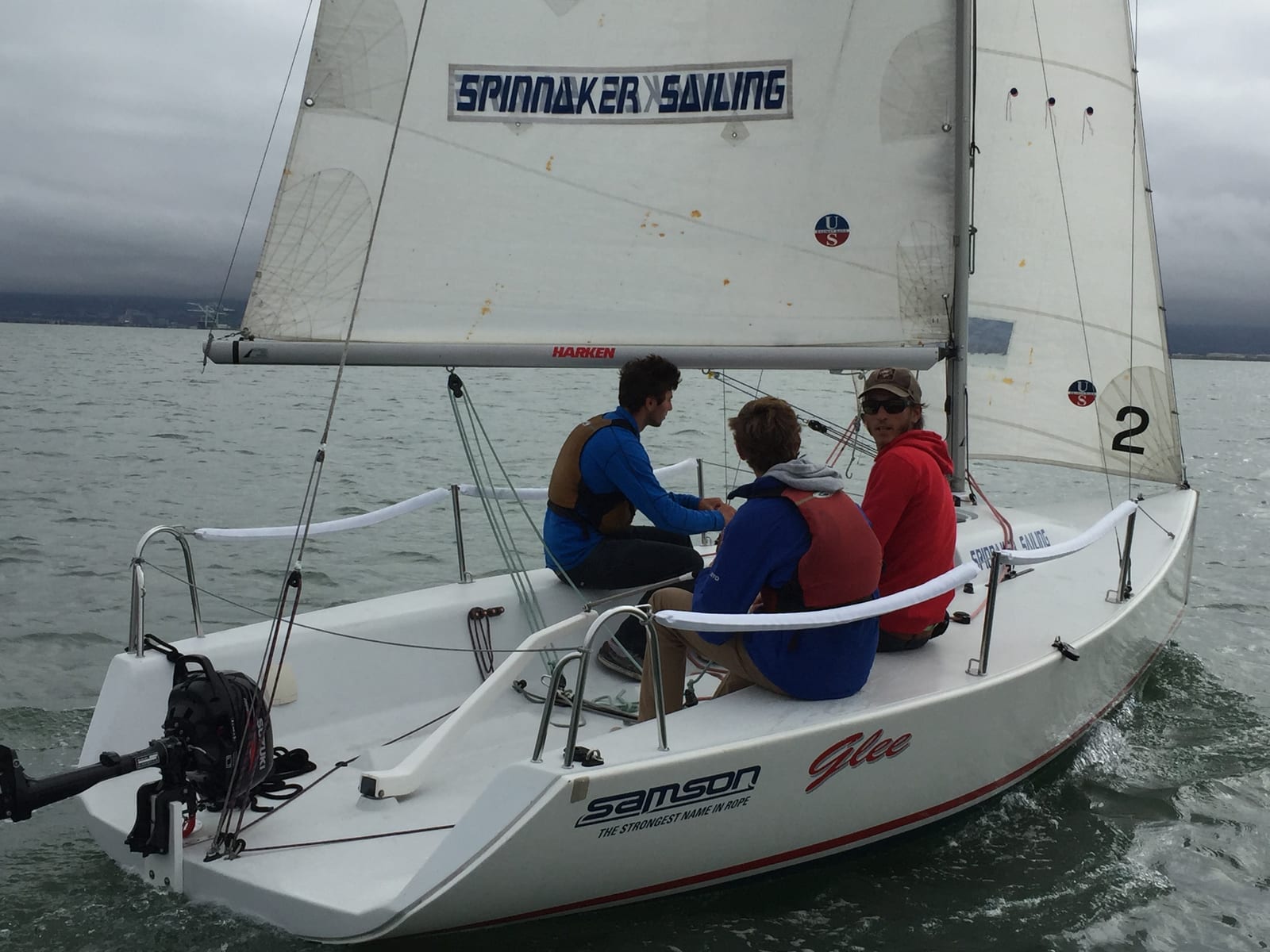
The Andrews 21 is a performance trainer from Alan Andrews, one of California's best-known yacht designers. She is light, responsive and simple to rig, with a furling jib, and she is built rugged enough to take the knocks a fleet boat takes. She rewards good trim and forgives the rest.
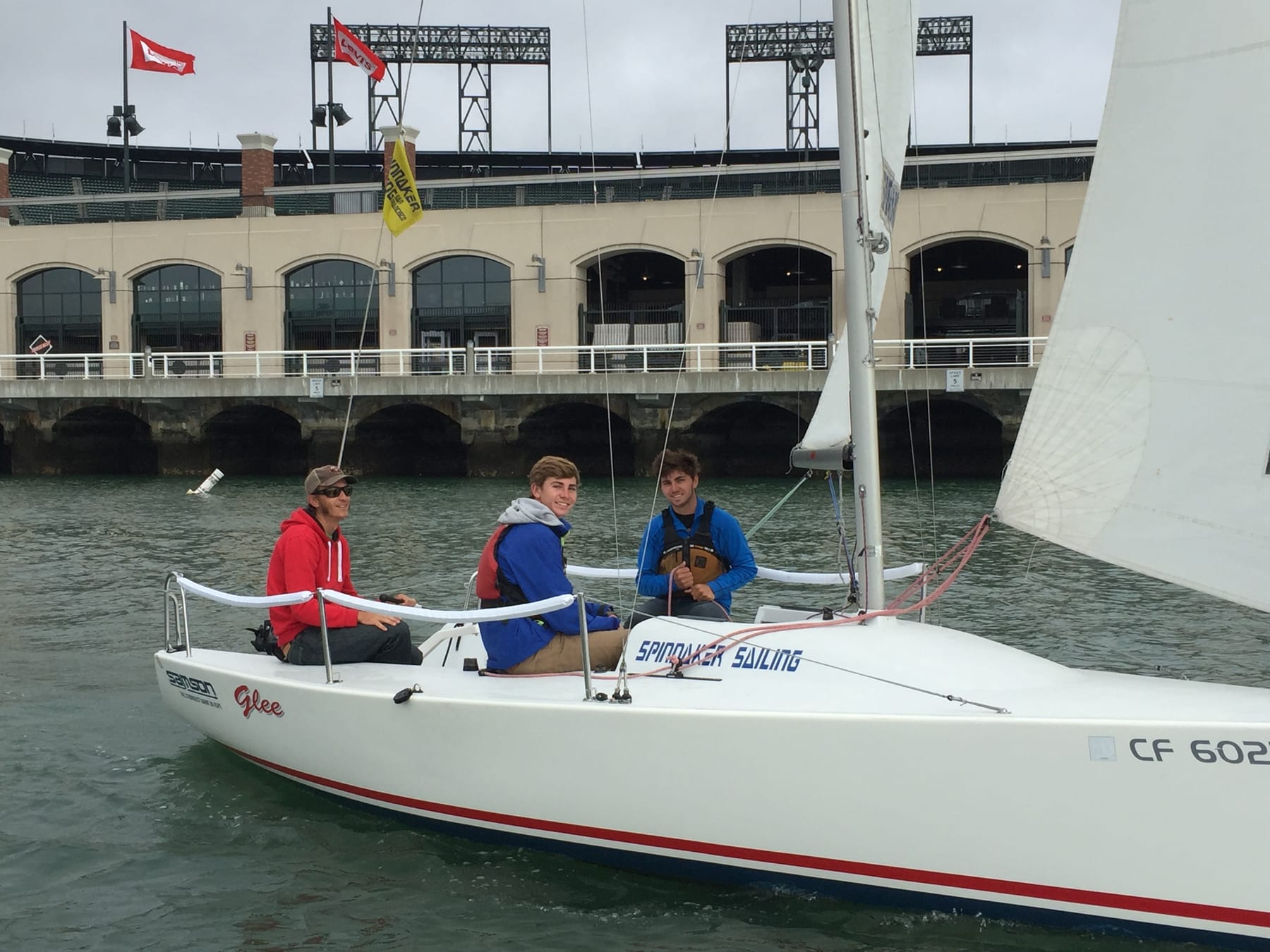
She is also the boat the Spinnaker Sailing school teaches on, which matters more than it sounds. If you learned on an Andrews, you already know where everything is, and every sail you take as a member builds hours and confidence on a boat that feels familiar. She is quick in light air, so a gentle morning on the Bay is a good day on an Andrews, not a slow one.
And she is the least expensive way into the program. If you want to sail often and keep it simple, that counts for a lot.
The J/80: a sportboat with a big-boat feel
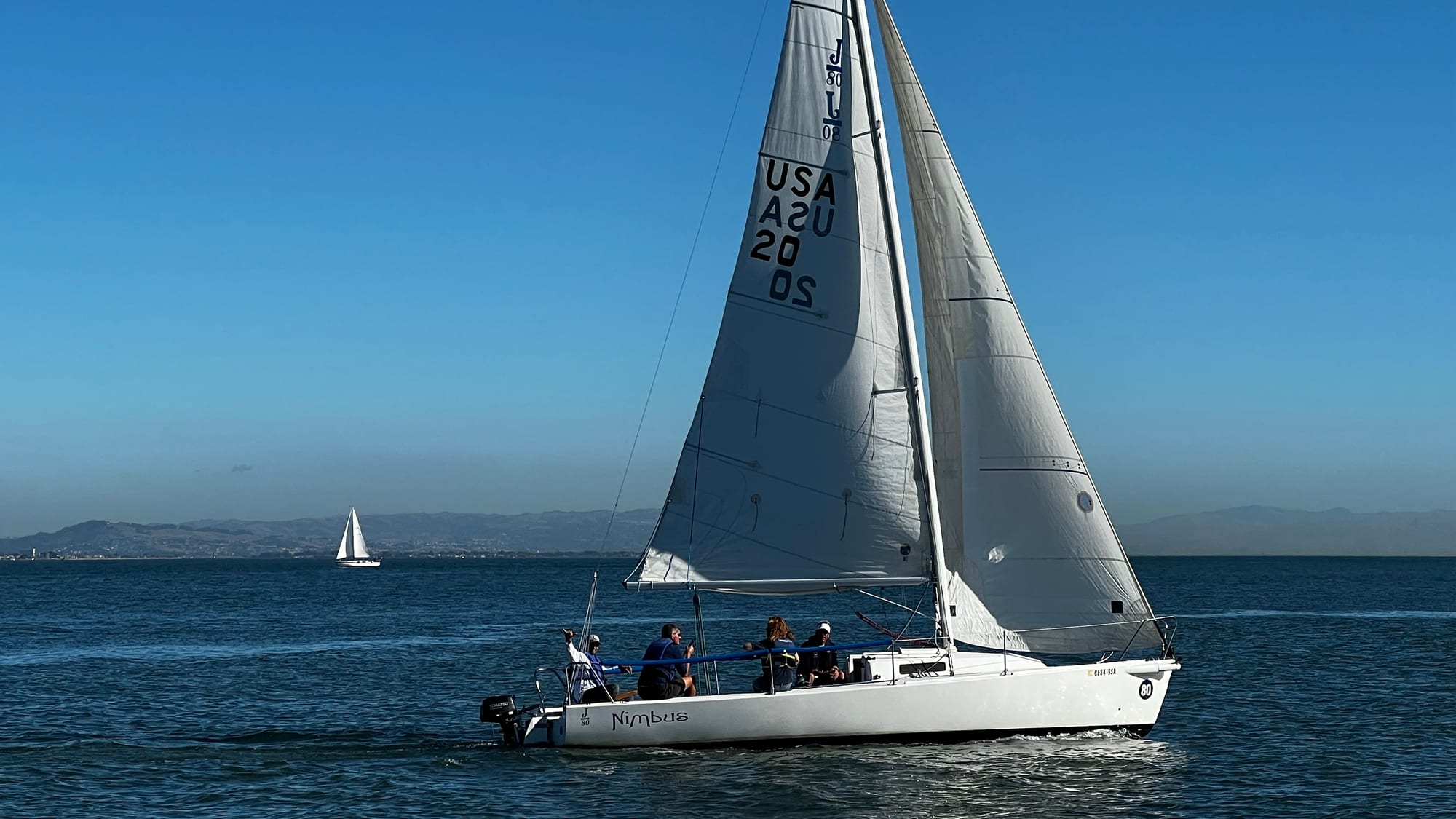
The J/80 is five feet longer and a different animal. A 1,400 lb lead keel on a 26-foot hull gives her a big-boat steadiness, and she is stiff and properly exciting once the afternoon breeze fills in. She will do fifteen knots under spinnaker, and she will also sail home calmly under main alone.
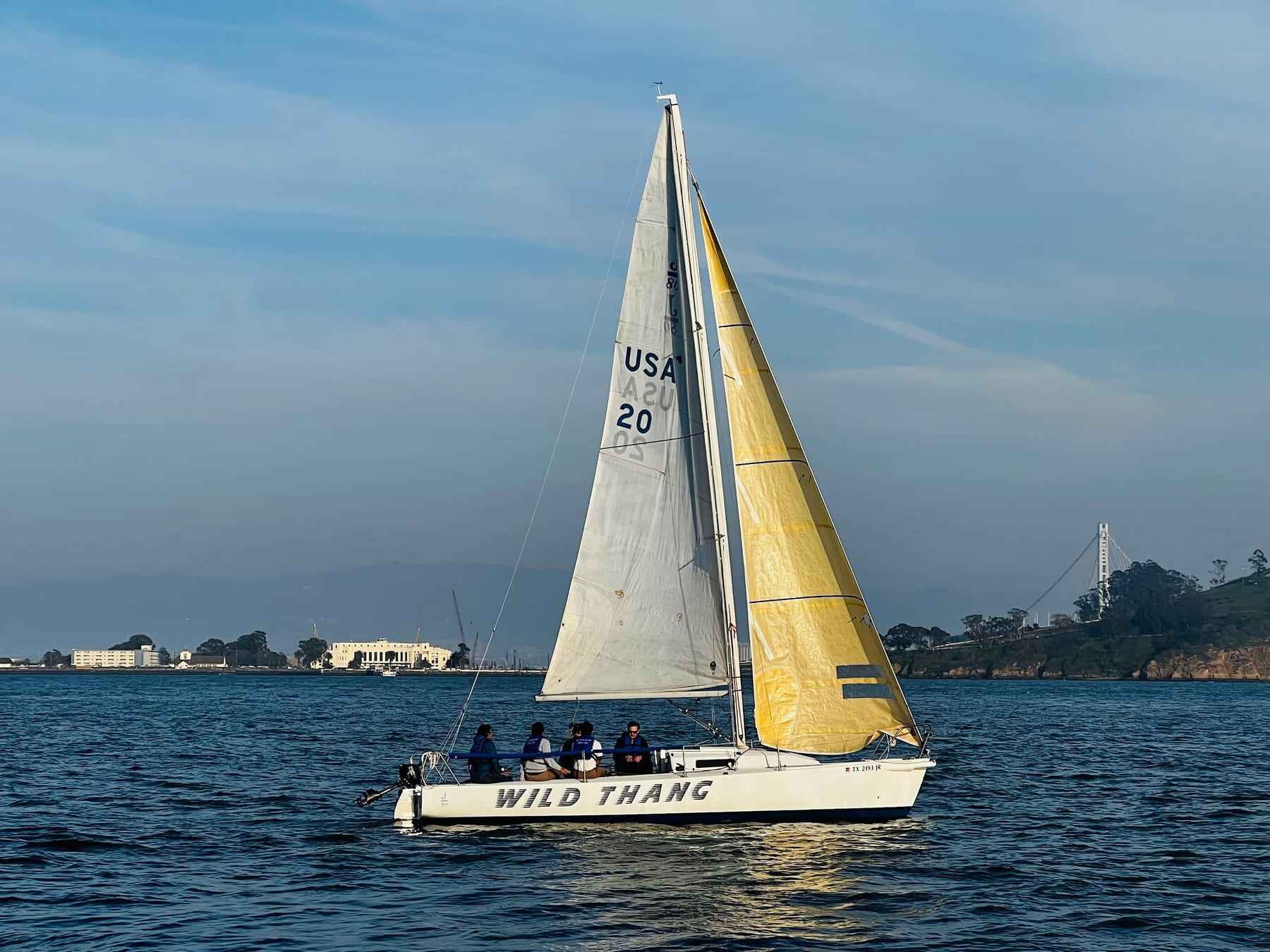
She is more comfortable with a crew, too. The cockpit is twelve feet long, so four people can work the boat without getting in each other's way, and the boom is high enough to duck under comfortably. If you like to bring friends, she has room for them.
The detail people miss: a J/80 membership includes the entire Andrews 21 fleet. If every J/80 is booked on your day, or the forecast suits a smaller boat, you can take an Andrews instead. That makes it the most flexible tier we offer.
Side by side
| Andrews 21 | J/80 | |
|---|---|---|
| Length | 21 ft | 26 ft |
| Displacement | 1,670 lbs | 2,900 lbs |
| Ballast | 650 lbs | 1,400 lbs |
| Sail area | 231 sq ft | 338 sq ft |
| Boats in the fleet | 7 | 4 |
| Certification | ASA 103 or equivalent | ASA 103 or equivalent |
| Also sails | Andrews 21 only | The whole Andrews 21 fleet |
Inside the cockpit
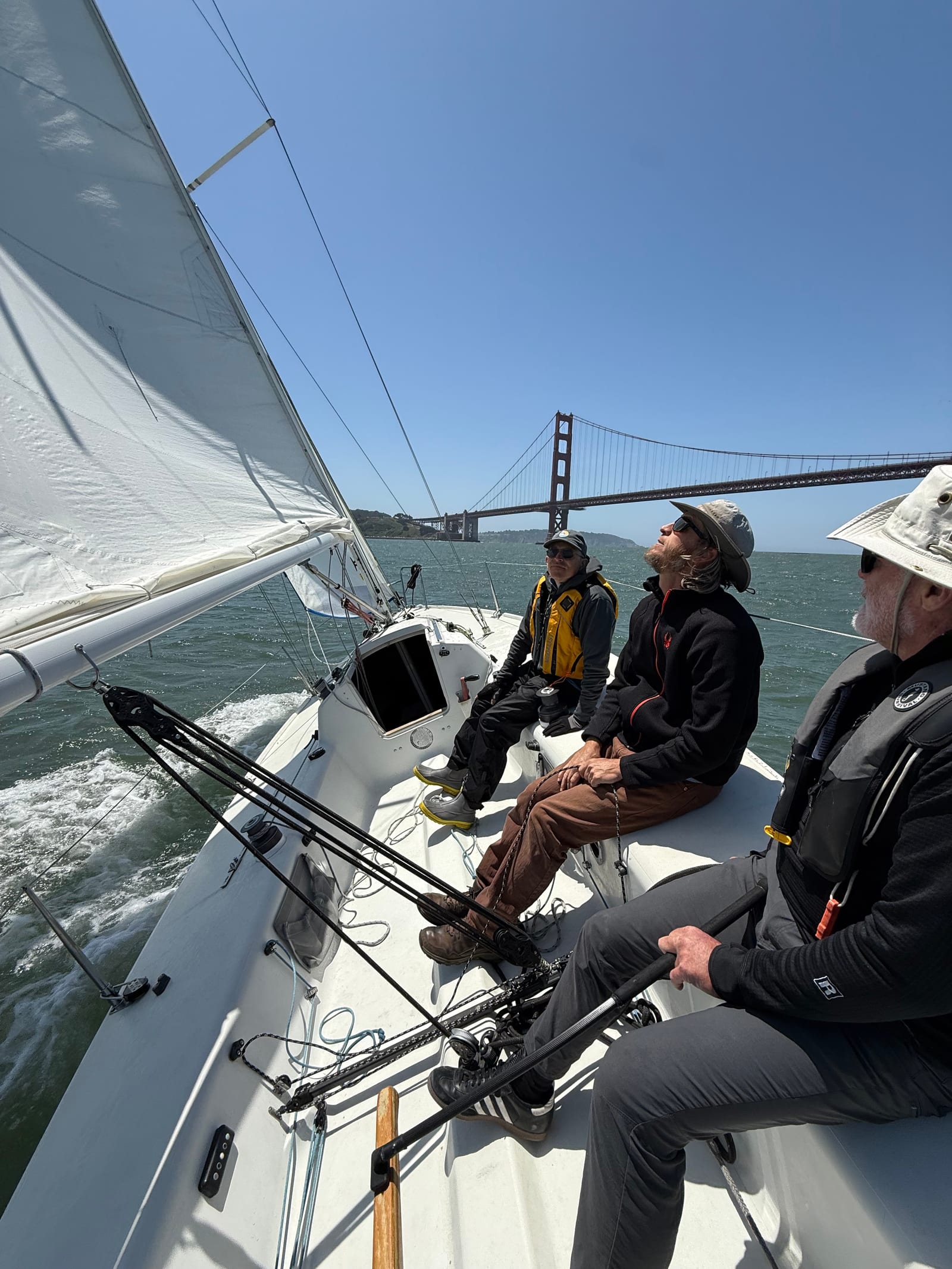
The numbers tell half the story. The other half is what it feels like to sit in each one. The Andrews puts a small crew close together, low to the water, feeling every puff. The J/80 gives the same crew room to spread out, with a longer cockpit and more boat under them.
How to choose
Choose the Andrews 21 if
- You learned on one and want to build hours on a boat you already know.
- You usually sail with one or two others.
- You like lighter days, or want to sharpen your sail trim.
- You want the simplest, least expensive way into the program.
Choose the J/80 if
- You want a lively boat for breezy afternoons.
- You regularly sail with a crew of three or four.
- You want the option of an Andrews 21 on the days a smaller boat suits better.
- You are already thinking about stepping up to bigger boats.
The Bay's afternoon westerly is a big part of that choice. If you mostly have summer afternoons free, a boat that loves breeze is worth having. Rendezvous Charters' guide to the Bay's wind and weather explains when it fills in.
You are not locked in
The choice is easier than it looks, because it is not permanent. You can move up a class at any time as your sailing changes. The J/80 is a natural next step after the Andrews, so starting small does not lock you in. And once you hold ASA 104, the larger boats open up: the J/105 Wonder is one of the bigger boats that opens up, and the fleet page compares all five.
If you are still weighing up whether a boat share makes sense at all, boat share, fractional ownership or buying compares the three, and what a sailboat really costs to own puts numbers to the alternative.
Ask us
Every rate and term for both boats is on the membership page. If you are still torn, tell us where you are as a sailor or call 415-543-7333, and we will tell you honestly which boat fits, and which one you will want in a year. Not certified yet? Spinnaker Sailing's lessons start from the same dock at Pier 40.